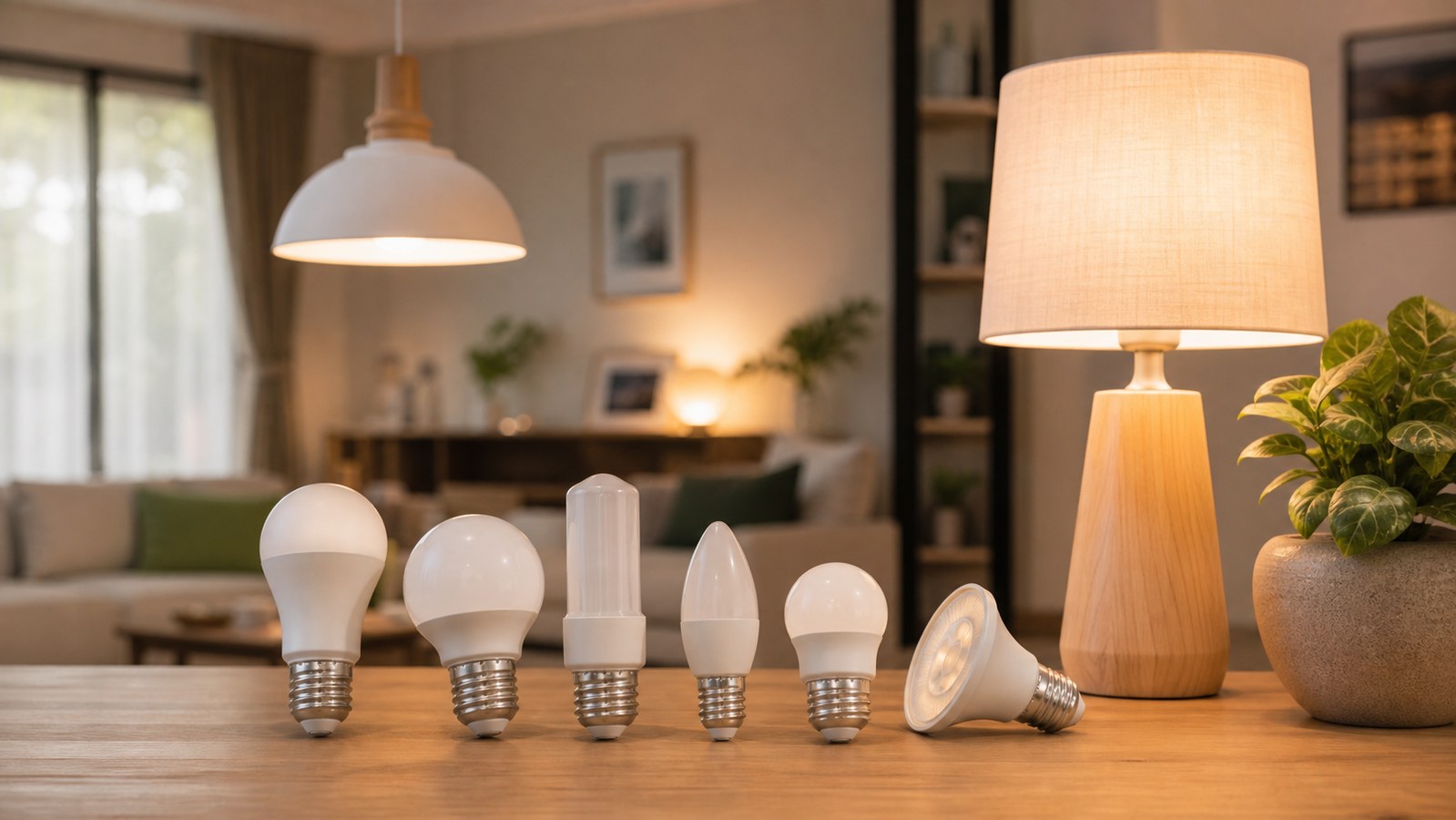
E27 bulbs are among the most common light bulbs in Thai homes. They fit many ceiling lights, table lamps, wall lights, pendants, and decorative fixtures. Yet many people still shop by wattage alone. With LEDs, you also need to consider lumens, color temperature, CRI, light distribution, and fixture compatibility. This practical guide explains how to choose E27 bulbs for your home.
- Check the base first: E27 is a screw base approximately 27 mm in diameter. It must match the fixture.
- Compare lumens, not just watts: Watts describe power consumption; lumens describe light output.
- Match the color temperature to the room: 2700–3000 K looks warm, 4000 K is neutral white, and 6500 K has a cool, crisp white appearance.
- Check CRI: Consider CRI 90+ in key areas where you want food, skin tones, materials, and furniture to look their best.
- Using a dimmer? Choose an LED E27 bulb explicitly marked dimmable and pair it with a compatible dimmer.
What is an E27 bulb?
E27 describes a screw base approximately 27 millimeters in diameter. It is widely used on A-shaped bulbs, globe bulbs, some candle bulbs, and other household LED lamps. E27 identifies the base, not the bulb’s brightness, color temperature, or light quality.
Before buying, check that your fixture really has an E27 socket. Some fixtures use E14, GU10, MR16-type lamps, or other connections. A bulb with the wrong base will not fit, even if its wattage and shape look similar.
Look at lumens as well as watts
Put this into practice: Write down the light output you need, then compare the E27 product options below, including their efficacy in lm/W.
With incandescent bulbs, people often knew roughly how bright 40 W, 60 W, or 100 W would be. For LED E27 bulbs, wattage does not translate directly into brightness because efficiency varies between models. Use the lumen rating on the packaging as your main guide to light output.
| Approximate light output | Traditional incandescent equivalent | Approximate LED E27 power | Typical applications |
|---|---|---|---|
| 450 lm | 40 W | 4–6 W | Bedside lamps and decorative lighting |
| 800 lm | 60 W | 7–10 W | Bedrooms and small living rooms |
| 1,100 lm | 75 W | 10–13 W | General rooms needing more light |
| 1,500 lm | 100 W | 14–18 W | Work areas, kitchens, or larger rooms |
Choose the color temperature for the activity
Put this into practice: Once you have decided whether the room needs 2700–3000 K or 4000 K, check the actual color options on the listings in the product comparison section.
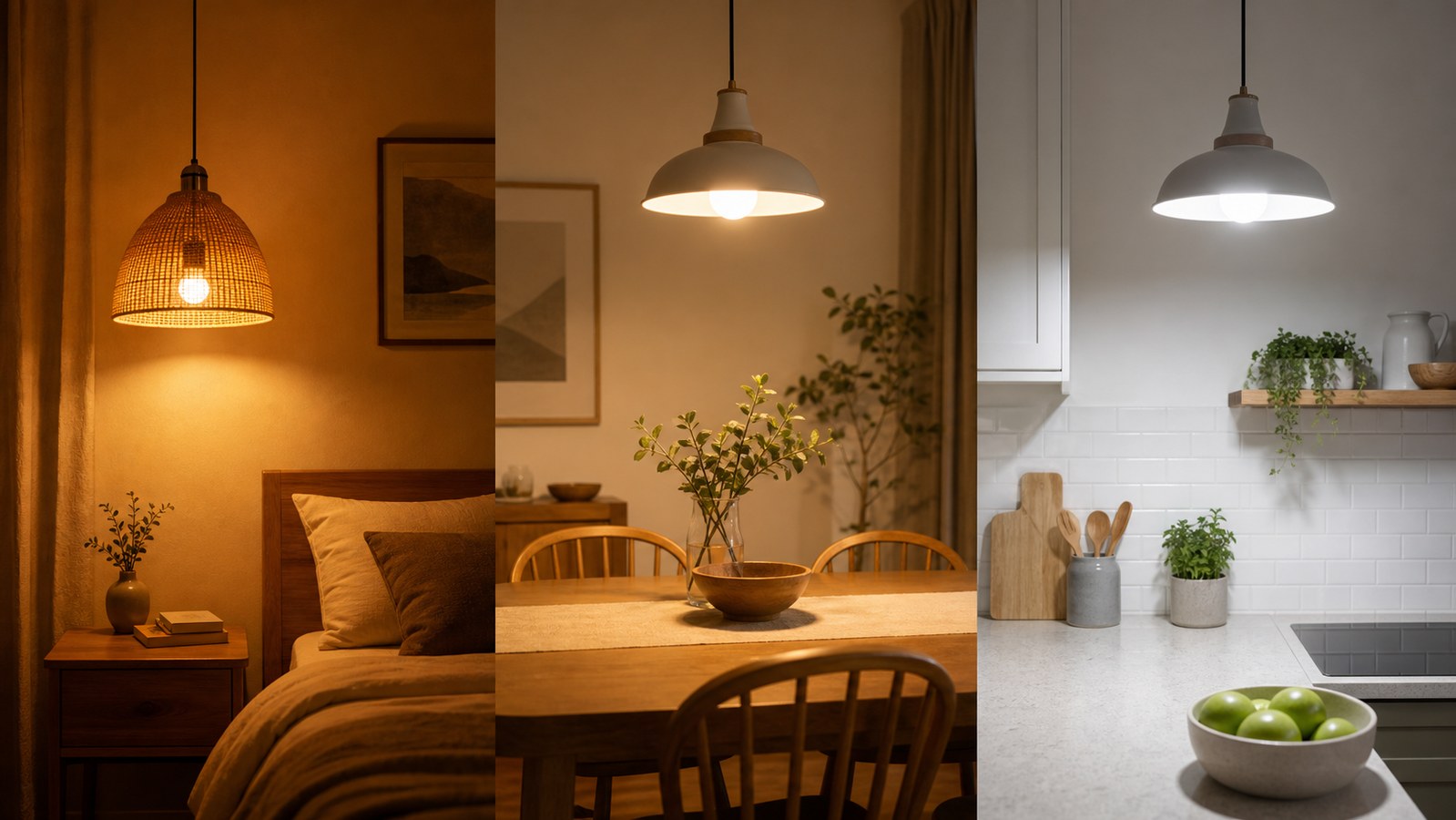
Color temperature, or CCT, strongly affects the atmosphere of a home. Warm-white E27 bulbs create a cozy, relaxed setting, while neutral-white light can suit reading, cooking, and dressing areas.
| Color temperature | Appearance and atmosphere | Typical applications |
|---|---|---|
| 2700–3000 K | Warm, soft, and relaxing | Bedrooms, living rooms, reading nooks, and dining areas |
| 3500–4000 K | Neutral and clear, without a strong yellow tone | Kitchens, desks, dressing rooms, and bathrooms |
| 5000–6500 K | Cool, crisp white with an alert feel | Areas where a cool-white appearance is preferred; use thoughtfully in spaces intended for relaxation |
Compare 2700 K, 3000 K, 4000 K, and 6500 K in Light Lab’s simulated room before choosing a bulb. Adjust the settings to explore changes in atmosphere, and learn how CRI affects the appearance of materials.
The demonstration illustrates color-temperature concepts. Check the actual bulb’s CCT, lumen output, and CRI before buying.
Does CRI matter for home lighting?
CRI describes how faithfully a light source renders colors. Under a low-CRI E27 bulb, food, skin, clothing, furniture, and artwork may look dull or distorted. CRI 80+ can work in many areas of a home. For dining tables, dressing areas, living rooms, or photo corners where color matters, consider CRI 90+.
Choose E27 bulbs room by room
| Area | E27 bulb guidance | What to watch for |
|---|---|---|
| Bedroom | 2700–3000 K; 450–800 lm per lighting point | Avoid harsh, cool-white light before bed |
| Living room | 2700–3000 K or 4000 K, depending on the interior style | Several light sources can feel softer than one very bright bulb |
| Kitchen | 4000 K, high CRI, and sufficient light output | Keep your own shadow off the worktop |
| Dining table | 2700–3000 K; CRI 90+ where possible | Direct light onto the food without shining into diners’ eyes |
| Bathroom | 4000 K in a fixture with appropriate moisture protection | Check the fixture’s IP rating and installation location |
| Outdoor fixture | Choose a bulb and fixture suitable for outdoor use | Check IP protection and heat buildup in enclosed fixtures |
Bulb shape and light distribution also matter
A practical example: A stick-shaped bulb may suit some fixtures better than an A60 bulb, but check the internal clearance first. See the Philips LED Stick 9.5 W example below.
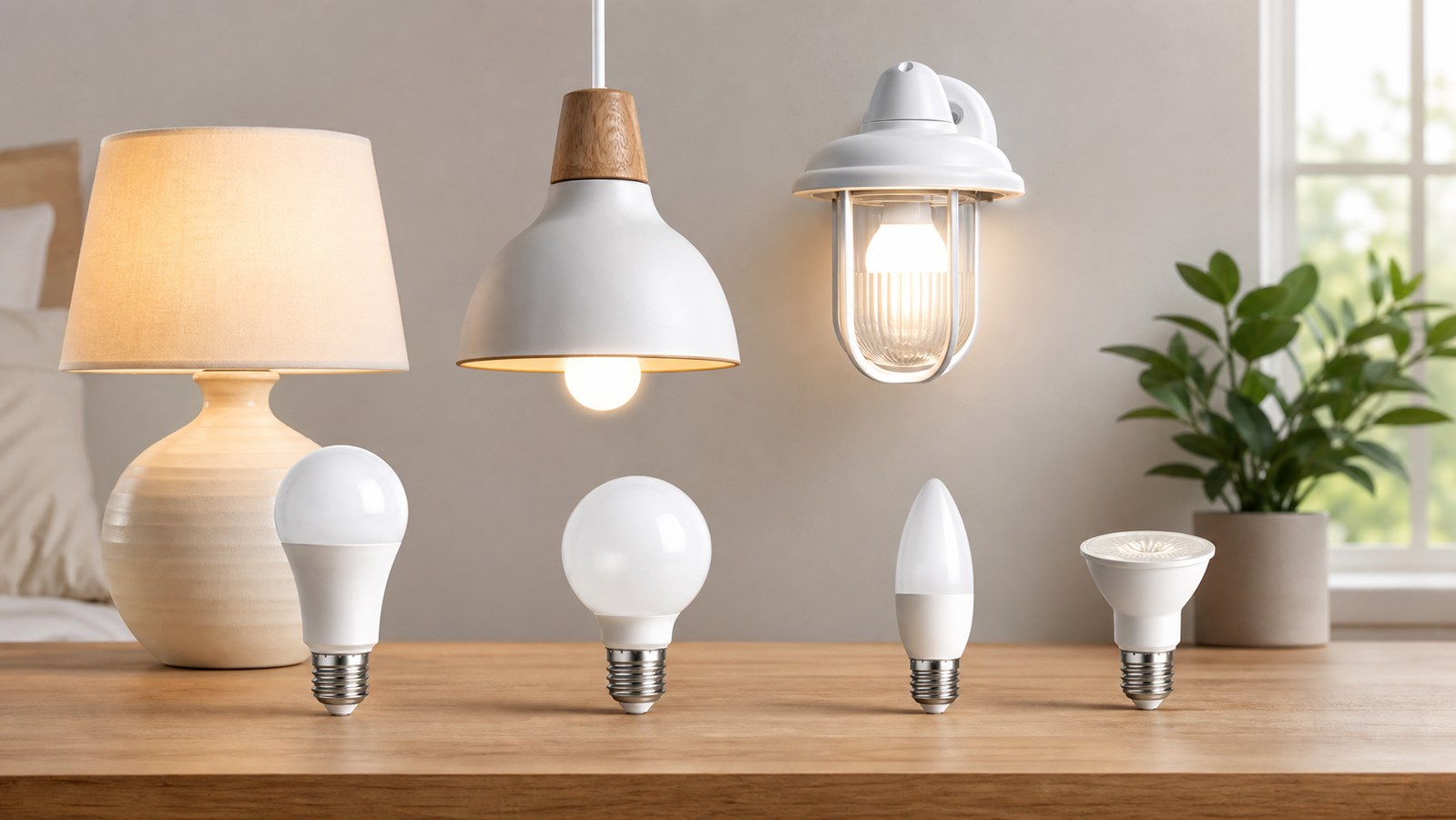
Some E27 bulbs distribute light in many directions, making them suitable for table lamps and clear-glass pendants that need light on all sides. Others direct more light forward, which can suit downlights or fixtures intended to illuminate the floor. An unsuitable shape or distribution may leave parts of the room dark or create bright, glaring spots.
Can E27 bulbs be used with a dimmer?
If your home has dimmers, choose E27 bulbs explicitly labeled dimmable and check that the dimmer supports the LED model. A non-dimmable LED may flicker, fail to dim, or fail prematurely when connected to a dimmer. Dimming ranges also differ between models, so test a sample before buying in quantity.
Common mistakes when choosing E27 bulbs
- Looking only at watts: Ignoring lumens can result in too much or too little light.
- Choosing an unsuitable color temperature: For example, 6500 K may feel harsh and unrelaxing in a bedroom.
- Ignoring bulb dimensions: Some bulbs are too large for small or enclosed fixtures.
- Overlooking CRI: Food may look less appealing, furniture colors may shift, and the room may look dull.
- Ignoring heat in enclosed fixtures: Heat buildup can accelerate deterioration of the LEDs and driver. Check that the bulb is suitable for the enclosure.
- Using an unsuitable bulb outdoors: Moisture and rain can cause early failure when the bulb, fixture, or installation is unsuitable.
Options to compare
E27 product options linked to this guide
These options are not ranked from best to worst. Use them to compare the selection criteria explained above. Before ordering, check wattage, lumens, color temperature, dimensions, and dimmer compatibility on the current listing, as sellers may change product variants and prices.
Option 1
Start with power and lumens
Open the listing and compare lm/W with other options. Do not use wattage alone to judge brightness.
Check product specificationsOption 2
Match the color temperature to the room
Check whether warm white, cool white, or daylight variants are available, then match the option to your bedroom, living room, or work area.
Check available light colorsProduct example from the Thai guide
Philips LED Stick 9.5 W E27
Approximately 1,055 lm. Its stick shape can suit tall fixtures or fixtures with limited space, subject to dimensional checks.
This example is non-dimmable and should be used with a regular on/off switch. Confirm the exact model, specifications, and color temperature before buying.
View Philips LED StickOption 4
Check the dimensions before fitting
Along with the E27 base, check the actual diameter and length, plus the space available for heat dissipation inside covered fixtures.
Check product dimensionsOption 5
Check quality and warranty terms
Look for the Thai Industrial Standards (TIS) mark, manufacturer or importer details, warranty duration, and reviews mentioning flicker or heat buildup.
Check seller informationAffiliate disclosure: The links above are affiliate links. This website may earn a commission from purchases at no additional cost to readers. The selection criteria remain based on lighting performance and suitability for the intended use.
Checklist before buying an E27 bulb
- Confirm that the fixture uses an E27 socket.
- Choose the lumen output you need, rather than looking only at watts.
- Match CCT to the room: for example, 3000 K for relaxing or 4000 K for task areas.
- Check CRI, especially in dining, dressing, and photography areas.
- Make sure the bulb fits and has suitable conditions for heat dissipation.
- For dimming, choose a dimmable bulb and a compatible LED dimmer.
- For outdoor areas or bathrooms, check the fixture’s IP rating and installation location.
Frequently asked questions about E27 bulbs
What kind of bulb is E27?
An E27 bulb has a screw base approximately 27 mm in diameter, commonly used in household fixtures. E27 identifies the base type, not the wattage, brightness, or color temperature.
What wattage should an LED E27 bulb be for home use?
Start with lumens. For example, 800 lm is roughly comparable to a 60 W incandescent bulb, while an LED may use around 7–10 W. Actual values depend on the model and its efficiency.
Which E27 light color is suitable for a bedroom?
2700–3000 K is often a good fit because it creates a warmer, more relaxing atmosphere than cool-white light. Add a separate task light if you need to read.
Can every E27 bulb be dimmed?
No. Choose a bulb labeled dimmable and use a compatible LED dimmer. An unsuitable combination can cause flicker, prevent dimming, or shorten the bulb’s life.
อ่านต่อเรื่องออกแบบแสงในบ้าน
รวมบทความที่ช่วยเลือก layer แสง หลอดไฟ และบรรยากาศให้เหมาะกับบ้าน