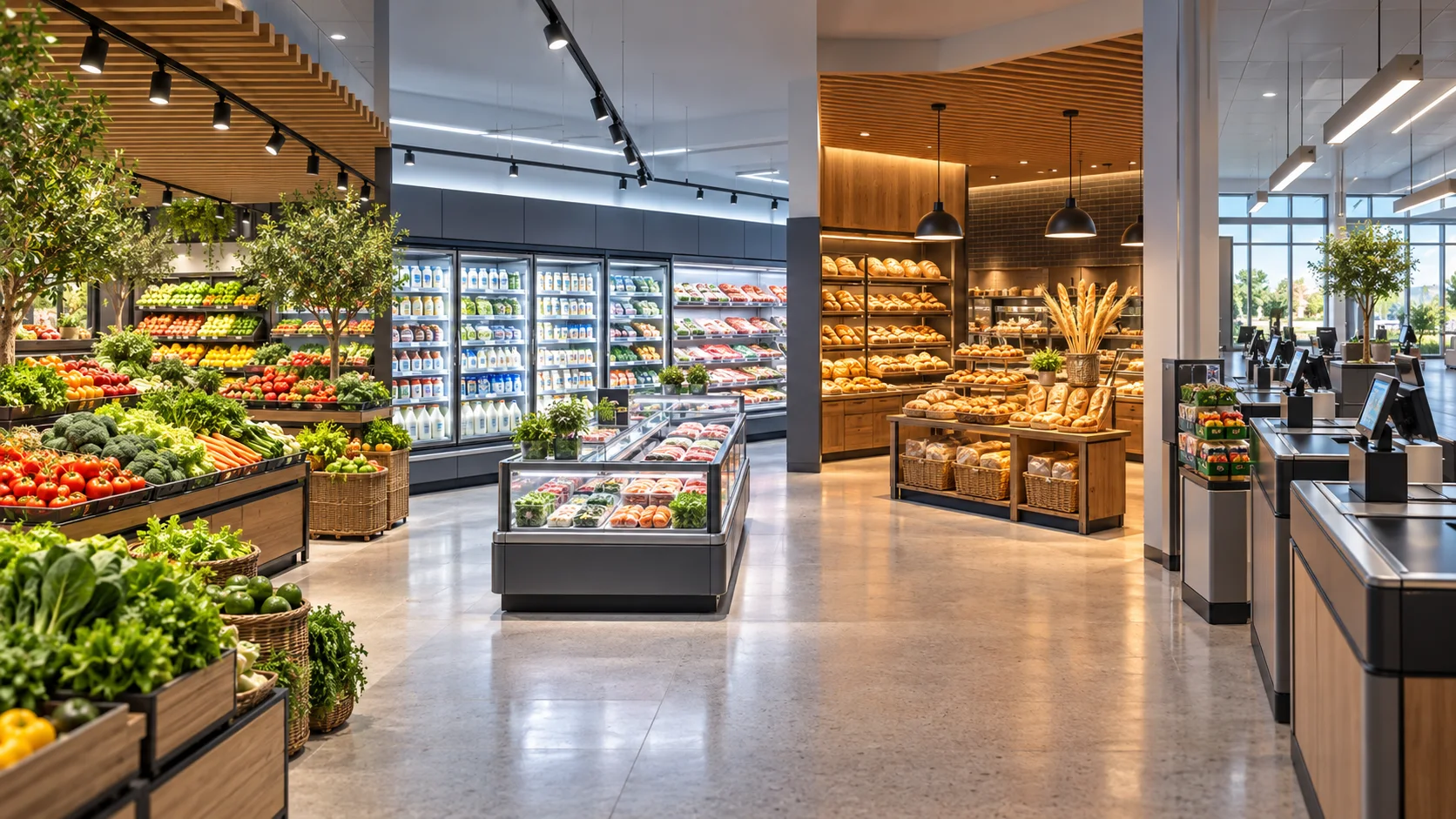
Food retail spaces contain glossy surfaces, reflective packaging, glass-fronted refrigerated cabinets, and tall shelving. Using the same type of luminaire throughout a store can create reflections or make products look flat. Choose light distribution and spectrum to suit each zone.
At a glance
Plan supermarket lighting around product categories to bring out the appearance of freshness, reduce shelf shadows, and manage energy use in spaces with long opening hours.
Principles to establish before design begins
Start with the activities, users, and actual site conditions. Then define measurable criteria, including illuminance on the relevant planes, uniformity, glare, color quality, and energy use. Select luminaires to meet the brief rather than starting with the products already available.
Fresh produce and bakery areas
Use high-quality color rendering and a balanced amount of directional light to give products depth without exposing food to unnecessary heat.
Refrigerated cabinets and shelving
Prioritize vertical illuminance, reduce reflections on glass, and check that light reaches the lower shelves.
Checkouts and aisles
Provide uniform lighting so that labels and screens are easy to read. Avoid flicker that could interfere with cameras.
Recommended workflow
- Survey the site and record architectural, electrical, and maintenance constraints.
- Define the design criteria and divide the space into zones according to activity.
- Calculate or simulate the lighting, checking performance on the planes that users actually view.
- Build mock-ups for areas where problems are most likely, then adjust the optical distribution, luminaire positions, and controls.
- Measure performance after installation, record the commissioning settings, and hand over instructions for maintaining the system.
Checklist before handover
- Check the light spectrum with the actual products on display.
- Coordinate luminaire positions with hanging signs and sprinklers.
- Separate lighting circuits according to opening hours and shelf-restocking schedules.
Frequently asked questions
Should I start with lux levels or choose luminaires first?
Start with the tasks and lighting-quality criteria. Then choose luminaires and positions that meet those criteria with appropriate energy use and within the available budget.
Can manufacturer specifications replace on-site measurements?
Not entirely. Datasheets support calculations and product selection, but actual performance depends on mounting distances, surface colors, obstructions, supply voltage, and system settings. Measure the lighting after installation.
References and further reading
Lumens Lab lighting calculator (Thai) · The Thai source was reviewed on 28 September 2026.
ทางลัดสำหรับวางแผนแสงสว่าง
เริ่มจากรวมบทความ เลือกเครื่องมือคำนวณ แล้วดูวิธีทดสอบหรือแหล่งเลือกโคมที่เกี่ยวข้อง